
YSRC explores major renewable diesel opportunity for a sustainable Yamatji future
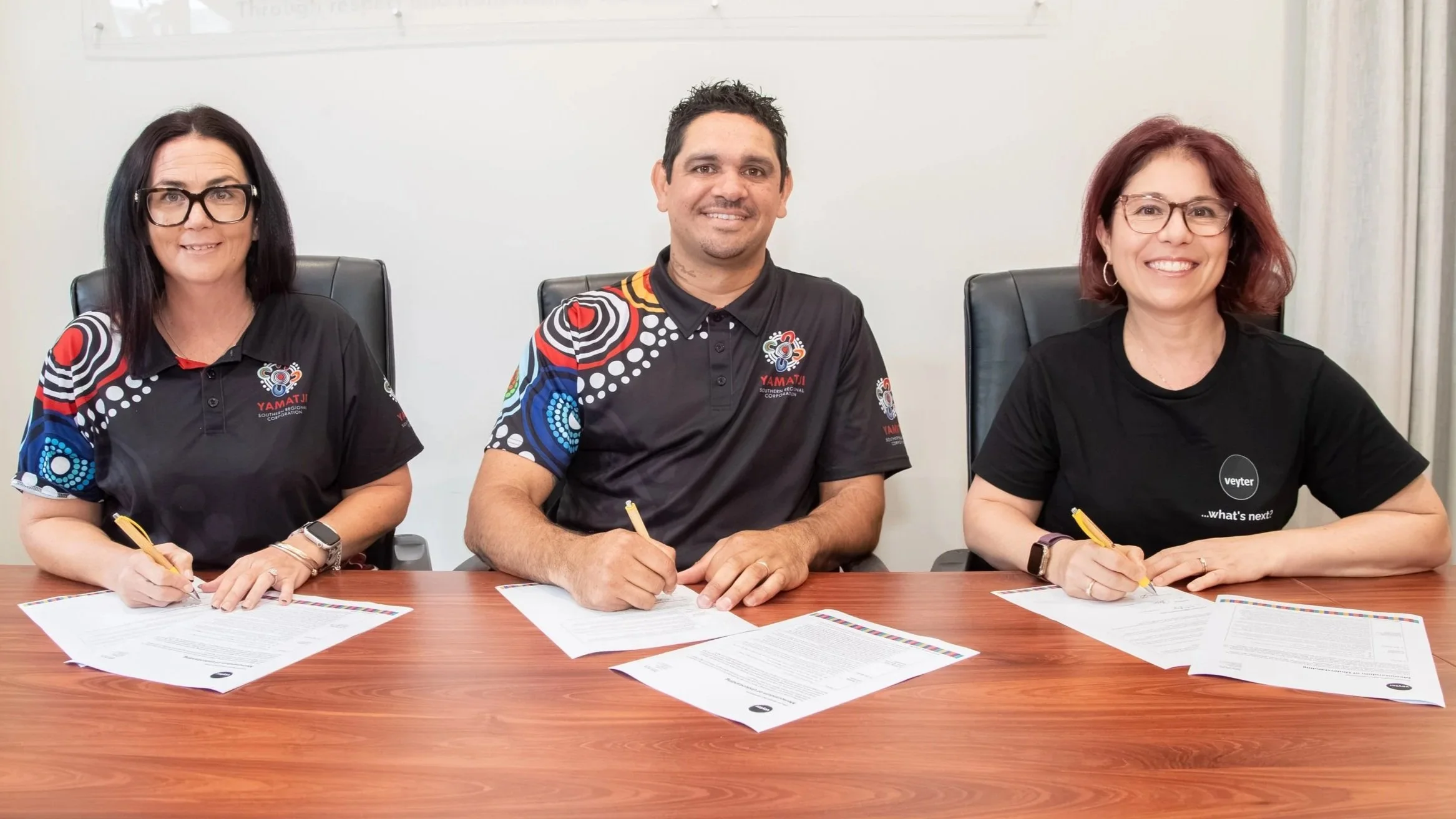
YSRC Luka Gray and Jarrad Oakley Nicholls with Andi Csontos from Veyter
Yamatji Southern Regional Corporation is taking another important step in planning for long term economic opportunities for Yamatji people, signing a Memorandum of Understanding with Veyter and Agilitas Advisory Corp. to explore the development of a major renewable diesel refinery in WA’s Mid West.
The proposed project is in its early development stage and will now move through feasibility studies to determine whether a renewable Agri-Diesel refinery could be developed near Geraldton.
Importantly, the project is being progressed on the basis of 51% majority ownership by Yamatji Traditional Owners, with the remaining 49% proposed to be held by Veyter.
This ownership model would give the Yamatji Nation a controlling interest in a major industrial development on Yamatji Country, creating an opportunity for Yamatji people to participate not simply as stakeholders or beneficiaries, but as majority owners.
YSRC Chief Executive Officer Luka Gray said the opportunity reflects YSRC’s focus on creating lasting economic benefits for current and future generations.
“For Yamatji people, this is about moving beyond participation to genuine ownership of major industry on our Country,” Luka said.
“A project of this scale has the potential to create lasting economic opportunities for Yamatji people, Mid West growers and the broader region, while contributing to Australia's domestic fuel security.”
What is being explored?
At concept stage, the proposed refinery would have the capacity to produce approximately 1.1 billion litres of renewable Agri-Diesel each year, using Western Australian canola and tallow.
Agri-Diesel can be used as a substitute for conventional diesel without requiring blending or engine modifications, and the proposed project is expected to significantly reduce lifecycle emissions compared with conventional diesel.
The fuel could potentially supply Australian industries including mining, agriculture, transport, aviation and defence.
The concept represents an indicative investment of approximately $2.5 billion, including the refinery, an integrated oilseed crushing facility and associated infrastructure.
Early estimates indicate the project could also support approximately 4,000 construction jobs and 400 direct ongoing operational roles, together with increased demand for Mid West agricultural products.
Why the Mid West?
The Mid West has a number of factors that make it suitable for further investigation, including access to agricultural feedstocks, industrial land, energy infrastructure and major industries that rely heavily on diesel.
The Oakajee Strategic Industrial Estate is one potential location being assessed, along with other sites within the Yamatji Nation ILUA area.
Using Western Australian canola and tallow to produce renewable diesel locally could also help retain more economic value within the region and Australia.
Planning for the future
The signing of the MOU marks the beginning of a detailed assessment process.
YSRC, Veyter and Agilitas have commenced a staged program of work to progress the project through feasibility and pre-FEED studies. Further technical assessment, stakeholder engagement and planning will be required before any decision is made to proceed with development.
Subject to feasibility work, approvals and a future final investment decision, first production is currently targeted for 2032.
For YSRC, exploring opportunities such as this forms part of our broader commitment to self determination, sustainable economic independence and creating long term opportunities for Yamatji Members and future generations.
About the partnership
Veyter is an Australian strategy and design firm working across mining, energy, construction and infrastructure and is the Australian subsidiary of Agilitas Advisory Corp.
Agilitas is a Canadian advisory firm with experience in First Nations led renewable energy and low carbon fuel projects, including projects progressing under majority First Nations ownership models.
Together, the parties will assess how this model could be applied to a major renewable fuel development on Yamatji Country.
The project remains at an early development stage. Further feasibility, stakeholder engagement and assessment will be undertaken before any final investment decision is made.